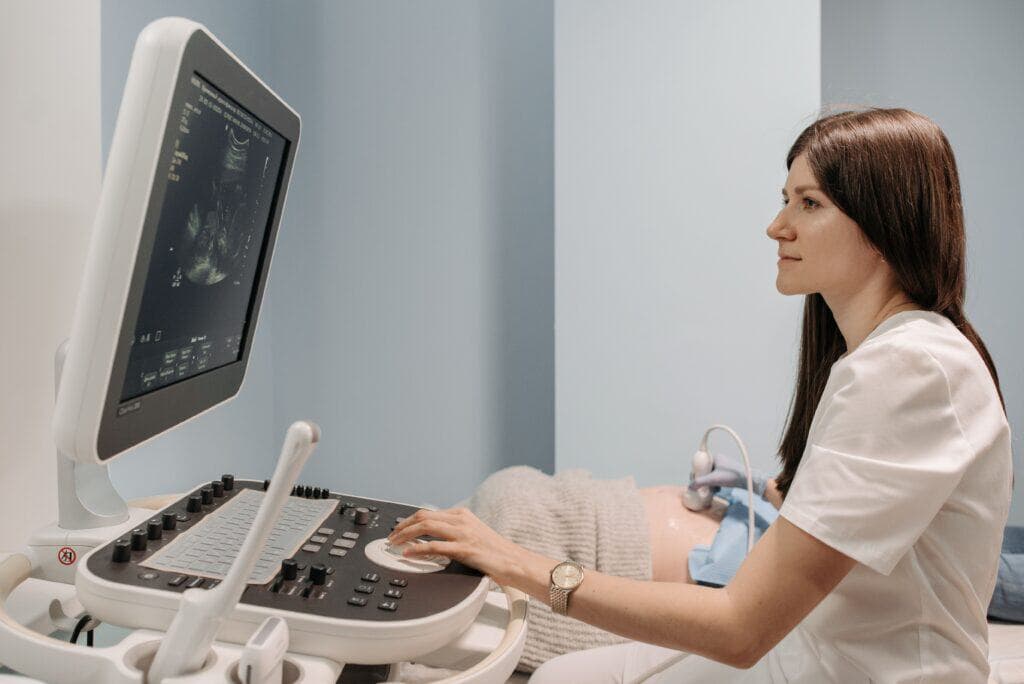
If you’ve ever wondered how much does an ultrasound tech make, you’re asking about one of the most rewarding careers in allied health. Diagnostic medical sonography combines hands-on patient care with advanced imaging technology, and the paycheck reflects that specialized skill set.
Nationally, an ultrasound technician earns somewhere between $78,000 and $97,000 a year on average, though the exact number depends heavily on location, experience, employer, and specialty. This guide walks through everything that shapes ultrasound technician pay, so you can get a realistic picture before you commit to the training or negotiate your next raise.
How Much Does an Ultrasound Tech Make on Average?

Across multiple salary databases, the average ultrasound tech salary lands in a fairly consistent range. Government wage data places diagnostic medical sonographers at roughly $84,000 to $89,000 per year, while private salary platforms report figures closer to $93,000 to $97,000 annually once bonuses and shift differentials are factored in.
Hourly, that works out to somewhere between $40 and $47 an hour for most working sonographers. Entry-level techs typically start lower, often in the $60,000 to $67,000 range, while experienced professionals with several years on the job and additional certifications can push well past $110,000.
The spread is wide because sonography pay isn’t a flat number. It’s built from a combination of geography, credentials, and the setting where you work. Learn more on YouTube.
A quick snapshot of where most ultrasound technicians land, based on career stage:
- Entry-level (0–2 years): roughly $60,000–$67,000 per year
- Mid-career (3–7 years): roughly $75,000–$90,000 per year
- Senior/lead sonographer (8+ years): roughly $95,000–$115,000+ per year
- Specialized or supervisory roles: $110,000 and up in many markets
Ultrasound Technician Salary by State and City
Where you practice makes an enormous difference to your paycheck. States with a higher cost of living and dense hospital networks, such as California, Massachusetts, and Washington D.C., consistently report the highest average pay for sonographers, sometimes exceeding $120,000 annually in competitive metro markets.
Rural regions and states with a lower cost of living tend to sit closer to the national floor. Even within a single state, city-to-city variation can swing by tens of thousands of dollars.
A technologist working in a major metropolitan hospital system will typically out-earn a peer in a small community clinic. That gap usually comes down to local demand, patient volume, and the cost-of-living adjustment built into hospital pay scales.
If relocation is on the table, comparing regional averages before you move is one of the smartest ways to increase lifetime earnings in this field.
States that consistently report above-average ultrasound technician salaries include:
- California
- Massachusetts
- Washington D.C.
- Oregon
- Alaska
Pay by Experience Level and Career Stage
Like most healthcare careers, sonography pay grows steadily with tenure. A newly certified ultrasound technician fresh out of an associate degree program usually starts near the bottom of the pay scale while building speed and confidence with different exam types.
After two to five years, most techs see a meaningful jump. They’re taking on more complex studies and starting to work with less supervision.
By the ten-year mark, many sonographers have moved into senior technologist, lead tech, or department supervisor roles, where salaries commonly reach the six-figure range. Some professionals also pick up per diem or travel assignments later in their career, which can pay a significant premium over staff positions, sometimes 20 to 40 percent higher, in exchange for flexibility and shorter-term contracts.
How Specialization Changes Ultrasound Technologist Pay

Not all sonography work pays the same, and specialization is one of the biggest levers for increasing income. General abdominal and OB/GYN sonographers make up the largest share of the workforce.
Cardiac sonographers, vascular technologists, and musculoskeletal ultrasound specialists often report higher average base salaries. Their imaging is more technically demanding, and their credentials are harder to obtain.
Cardiac sonography in particular tends to pay a premium, frequently landing above $90,000 annually even at the entry level in some markets. Cross-training in a second specialty, such as adding vascular certification to an existing OB/GYN background, is one of the most reliable ways to boost earning potential without switching employers entirely.
Specialties that tend to command higher-than-average pay include:
- Cardiac sonography (echocardiography)
- Vascular technology
- Musculoskeletal ultrasound
- Interventional or breast sonography
Work Setting and Industry Differences
An ultrasound technician’s paycheck also shifts depending on where they’re employed. Outpatient imaging centers frequently offer some of the strongest average salaries because patient volume is high and scheduling is predictable, which keeps productivity-based pay strong.
Hospitals typically offer more comprehensive benefits and shift differentials for nights, weekends, and on-call rotations. That can meaningfully raise total compensation even if the base salary looks similar to other settings.
Government employers, including the Department of Veterans Affairs, and academic medical centers tied to university hospitals also tend to report above-average pay, often because of union contracts or standardized government pay scales. Private physician offices generally sit at the lower end of the range, though they often come with more predictable daytime hours.
Education, Certification, and Licensing Requirements
Most working sonographers hold at minimum an associate degree in diagnostic medical sonography, and many pursue a bachelor’s degree or a post-primary certificate to specialize further. Passing the American Registry for Diagnostic Medical Sonography exam, or a similar credentialing body, is standard for most employers and is often a prerequisite for the higher end of the pay scale.
What many new techs don’t anticipate is how much ongoing administrative work comes with maintaining those credentials. Registries, state licenses, CPR certifications, and continuing education requirements all carry renewal deadlines. Missing one can mean a lapse in your ability to legally work, not to mention the late fees and paperwork headaches that follow.
A lot of sonographers end up juggling three or four separate renewal dates across different certifying bodies, plus malpractice insurance and any professional memberships tied to their specialty.
This is exactly the kind of scheduling risk that a dedicated renewal tracking tool solves. An app like Renew Reminder is built to keep every recurring deadline, license renewal, and subscription in one place, sending alerts well before anything expires so a busy sonography schedule never costs you a credential. It’s a small habit that protects a salary you’ve worked hard to earn.
You can explore the tool at Renew Reminder, or grab it directly for your phone through the Android app on Google Play or the iOS app on the App Store.
Career Outlook for Sonographers
Beyond the paycheck, the job outlook for ultrasound technicians remains strong. Diagnostic imaging demand continues to grow as the population ages and outpatient care expands.
Sonography is regularly cited as one of the fastest-growing allied health careers relative to the length of training required. For someone weighing the cost of an associate degree against future earning potential, sonography compares favorably to many other healthcare support roles that require similar time investment.
Frequently Asked Questions
How much does an ultrasound tech make per hour? Most ultrasound technicians earn between $40 and $47 per hour on average, though entry-level pay can start closer to $30 an hour and experienced specialists in high-demand markets can earn $55 or more.
Do ultrasound techs make more than nurses? It varies by specialty and experience, but sonographer pay is often comparable to or higher than an entry-level registered nurse’s salary, especially once specialization and shift differentials are factored in.
What is the highest-paying ultrasound specialty? Cardiac and vascular sonography typically report the highest average salaries due to the technical complexity and additional certification required.
Is becoming an ultrasound tech worth it financially? For most graduates, yes. The relatively short training period compared to the resulting salary makes sonography one of the stronger returns on investment in allied health.
Do ultrasound technicians get paid overtime? Many hospital-based sonographers are eligible for overtime and on-call pay, which can add meaningfully to total annual compensation.