Most people don’t realize how many active subscriptions they have until they actually sit down and count them. Streaming, cloud storage, a meditation app from two years ago, a food delivery membership you forgot to cancel. The right app to track subscriptions turns that fuzzy guess into a real number, and that number is usually higher than expected.
This article breaks down why tracking recurring payments matters more in 2026 than ever, what a genuinely useful app to track subscriptions should offer, and how a tool like RenewReminder handles the job without asking for your bank login.
Why Tracking Subscriptions Has Become a Daily Habit for Many

A decade ago, most households paid for cable and maybe one or two other services. Now it’s common to have ten, fifteen, or more active plans spread across entertainment, fitness, productivity, and shopping memberships.
Each one bills separately, on its own cycle, with its own renewal date. Without a system, it’s nearly impossible to remember what’s active, what auto-renewed last month, and what quietly increased in price. This is exactly the gap an app to track subscriptions is built to close.
What Happens Without a Tracking System
Skipping a dedicated tool doesn’t mean subscriptions disappear from your budget; it just means they’re harder to see. A few common patterns show up again and again.
Free trials convert into paid plans because the cancellation window passes unnoticed. Annual renewals catch people off guard because a once-a-year charge is easy to forget between billing cycles. Price increases go unquestioned since most people don’t check whether last month’s fee matches this month’s.
An app to track subscriptions solves all three by keeping renewal dates and amounts visible in one place, instead of scattered across emails and bank statements.
What to Look for in a Subscription Tracking Tool
Not every tool on the market handles this well. Here’s what separates a genuinely helpful subscription tracker from one that just adds clutter to your phone.
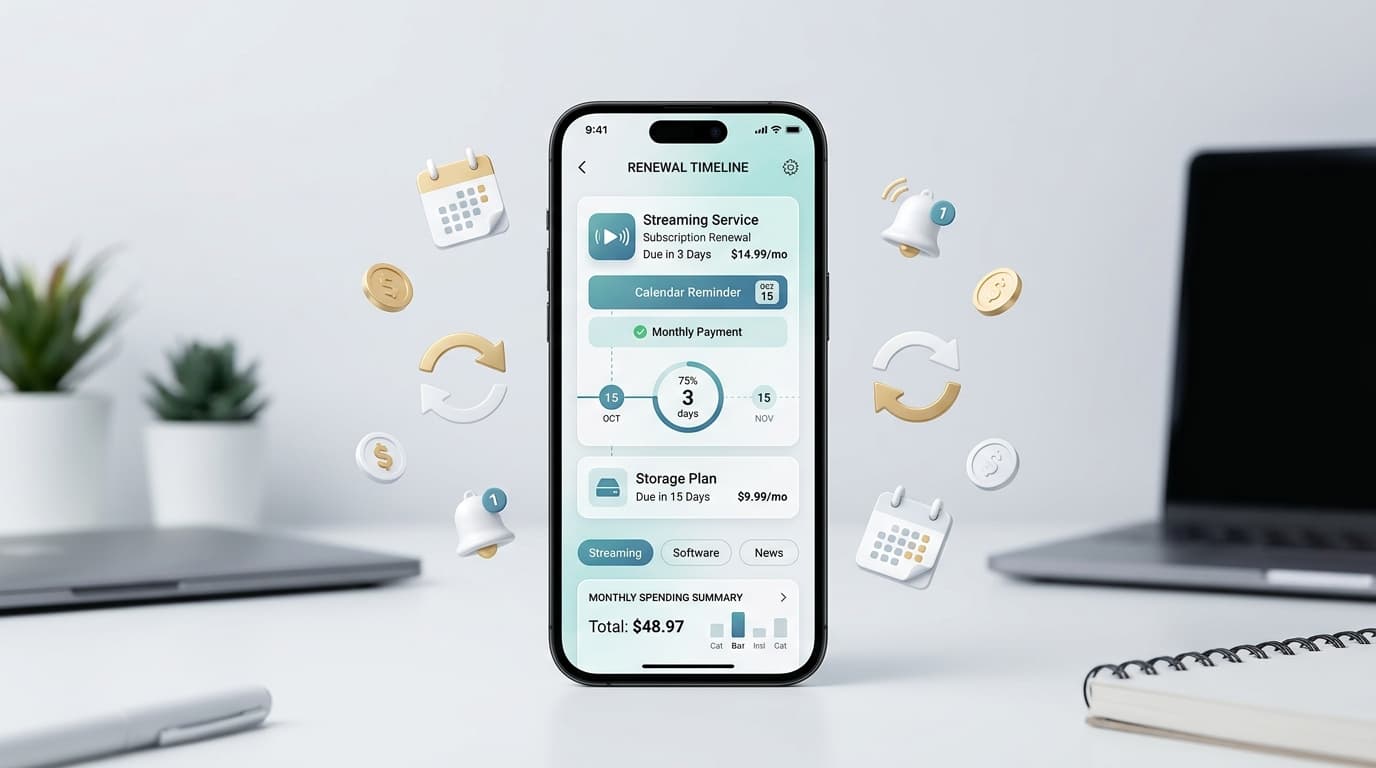
Clear renewal alerts. You want a heads-up days before a charge hits, not a notification after the money is already gone.
Simple manual logging. Many subscriptions, like a local gym or a neighborhood service, can’t be pulled automatically. Manual entry should be quick and painless.
A spending summary you can actually read. Totals by month, by year, and by category matter more than a wall of raw transaction data.
No demand for bank credentials. A tool built to help you monitor subscriptions doesn’t need direct access to your bank account to do its job well.
Support across devices. Whether you’re on Android or iPhone, your subscription list should stay consistent and current.
How RenewReminder Approaches This
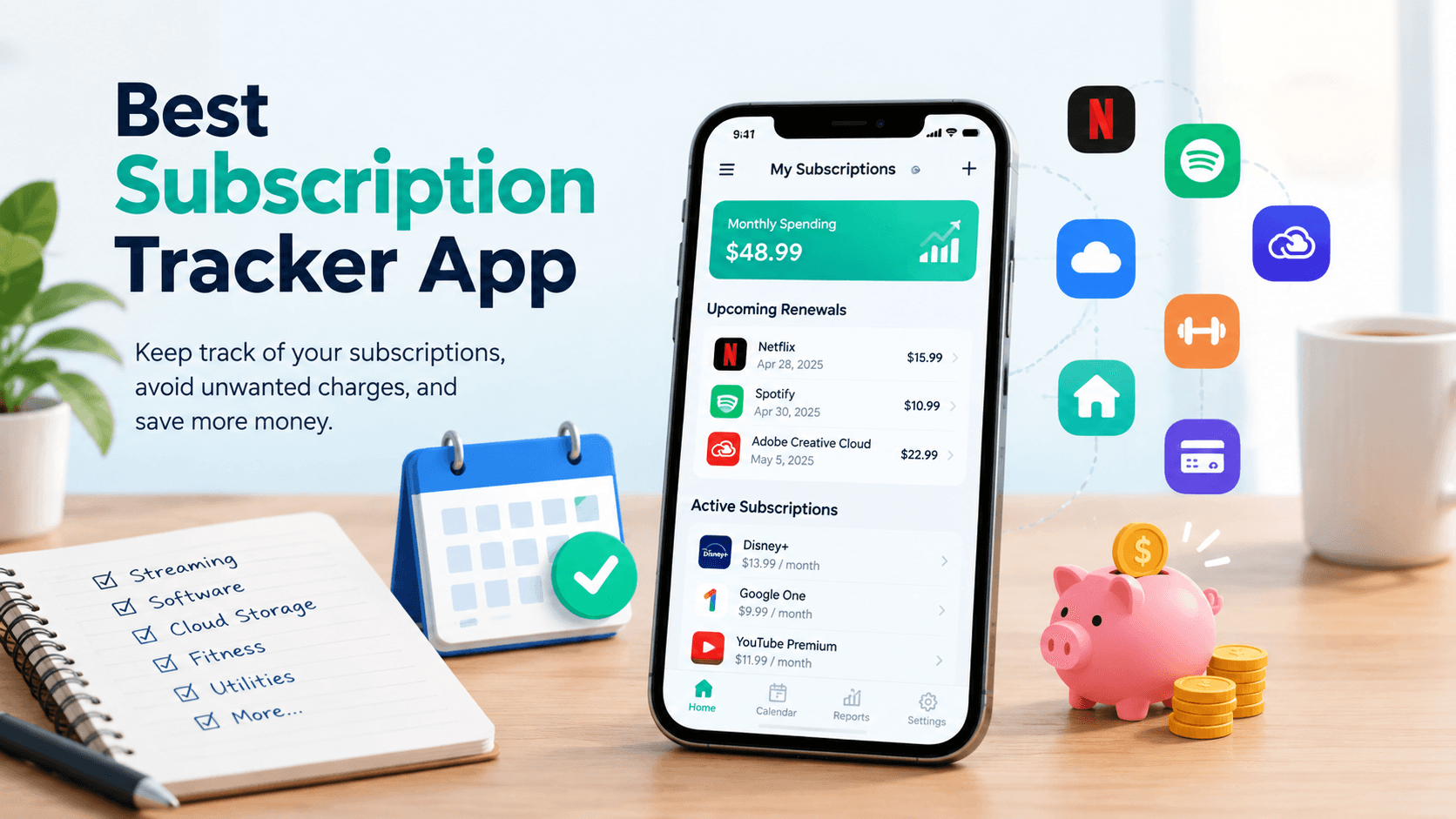
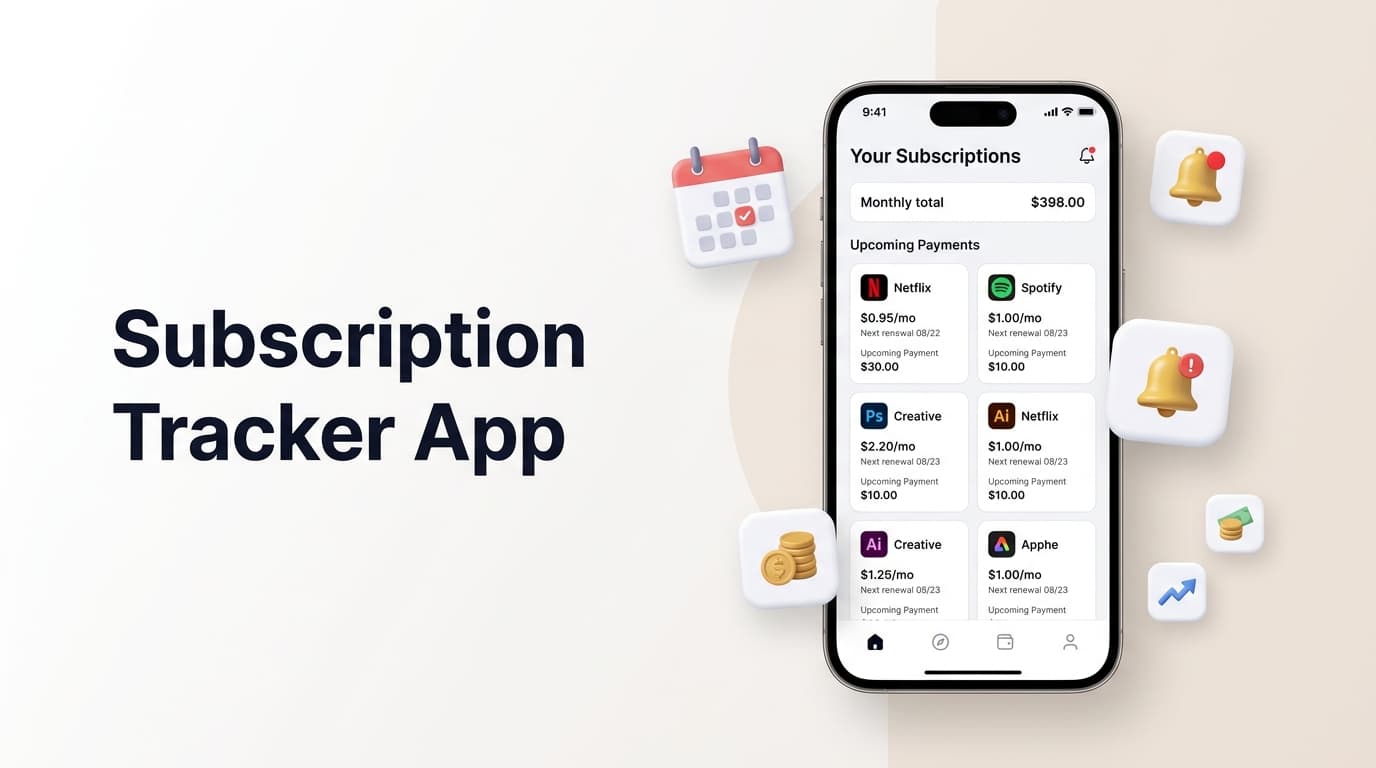
RenewReminder was designed as a straightforward app to track subscriptions without the extra steps most tools force you through. You add each subscription manually, set your own reminder timing, and get a running picture of your monthly and yearly recurring spend.
There’s no requirement to connect a bank account or hand over card details just to log a renewal date. You choose the billing cycle, whether it’s weekly, monthly, or yearly, and the app keeps you ahead of the charge rather than reacting after it lands. Everything lives on the Renew Reminder, where you can see how the tracking dashboard and reminder system work together.
Real Scenarios Where a Subscription Tracker Pays for Itself

Picture a free trial for a design tool that was supposed to end after two weeks. Without a reminder, it converts into a paid plan and runs quietly for four months before anyone notices. That’s one missed cancellation covering the cost of using a tracker for a full year.
Or consider a streaming bundle that raised its price twice in eighteen months. Most subscribers never compare the current charge to what they originally signed up for. A visible history makes that kind of drift obvious instead of invisible.
Does Where You Live Change How You Track Subscriptions?
Recurring billing isn’t tied to one currency or one country. Someone managing a local gym membership, a regional news subscription, and an international streaming plan all at once needs a tool flexible enough to handle mixed currencies and different renewal calendars, not one built around a single market’s habits.
Building the Habit, Not Just Installing the App
Downloading a tracker is the easy part. The habit that actually saves money is a quick monthly check: open the app, scan the upcoming renewals, and decide whether each one still earns its place in your budget. That five-minute routine is where the real value shows up.
Frequently Asked Questions
What is the best app to track subscriptions?
The best option depends on your habits, but look for one with manual entry, clear renewal reminders, and no requirement to link your bank account. RenewReminder is built around exactly that approach.
How do I know which subscriptions I’m still paying for?
Start by checking recent bank and card statements for recurring charges, then log each one in a tracking app along with its renewal date. Once everything is listed, the pattern becomes obvious.
Is it safe to use an app to track subscriptions?
Yes, especially with tools that rely on manual entry instead of direct bank access. That approach keeps sensitive financial credentials out of the picture entirely.
Can tracking subscriptions actually save money?
In most cases, yes. Spotting even one forgotten trial or unused plan is usually enough to offset months of using the app, and many people find more than one.
Is RenewReminder available on both Android and iPhone?
Yes, it’s available for both platforms so the same tracking habit works no matter which device you use day to day.
Final Thoughts
Subscriptions are only going to multiply as more services move to recurring billing models. Having a reliable app to track subscriptions isn’t an extra step anymore; it’s a basic part of managing money in 2026. Download RenewReminder on Google Play for Android or on the App Store for iPhone, and start seeing exactly what you’re paying for.