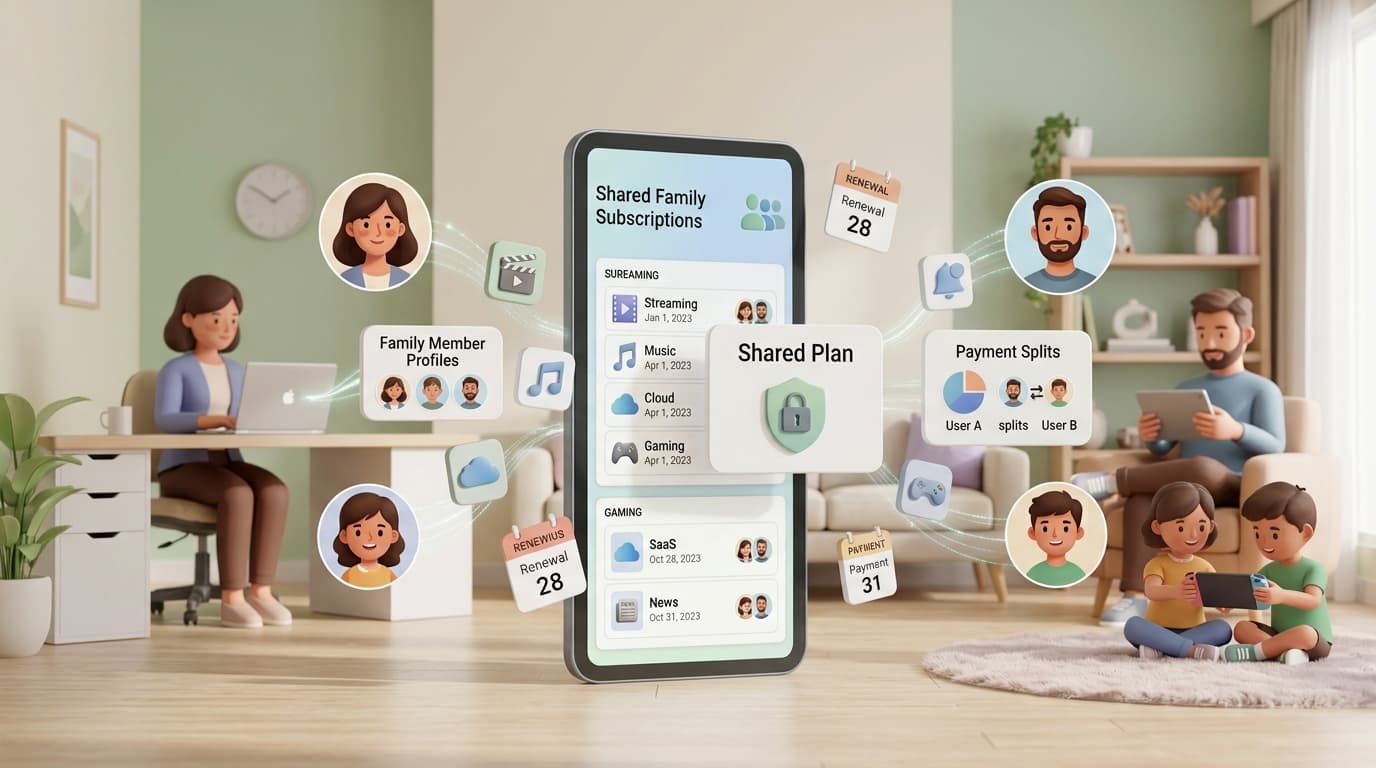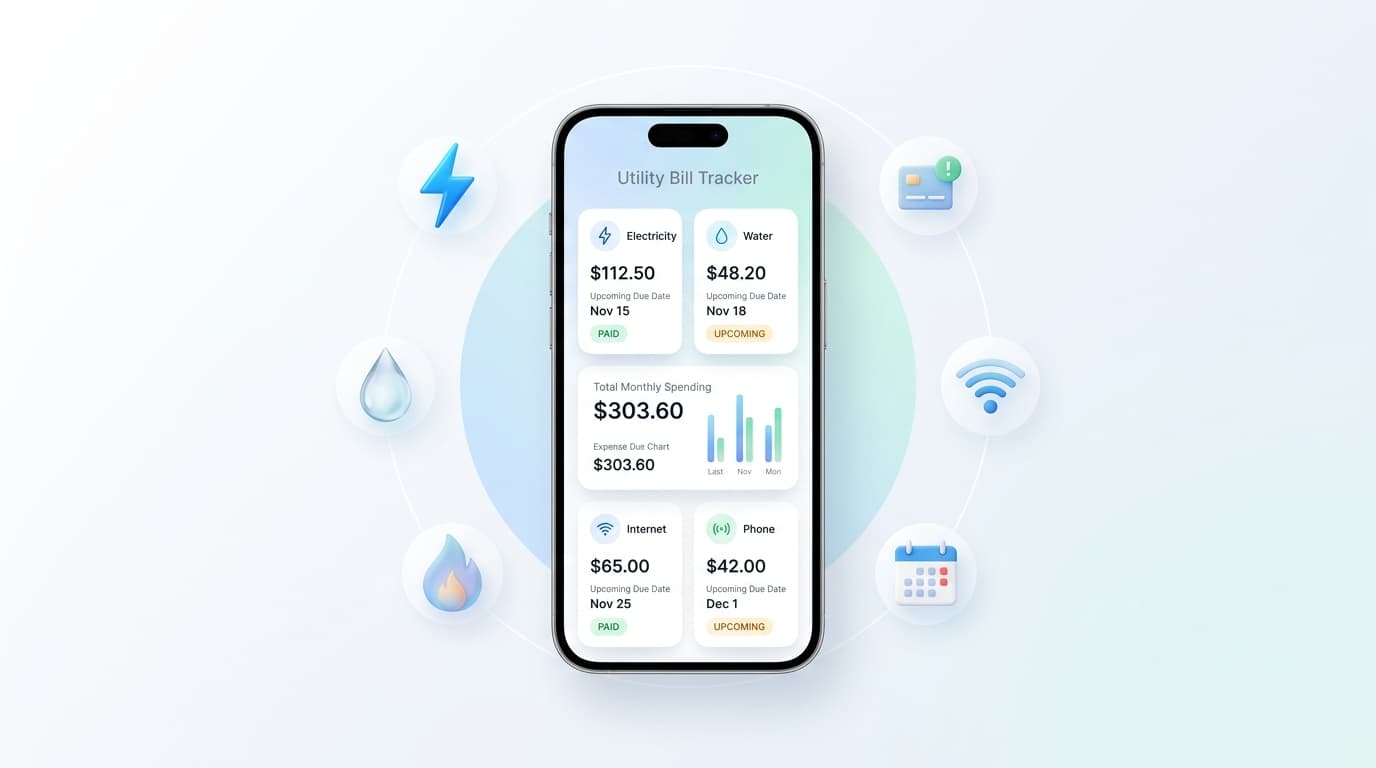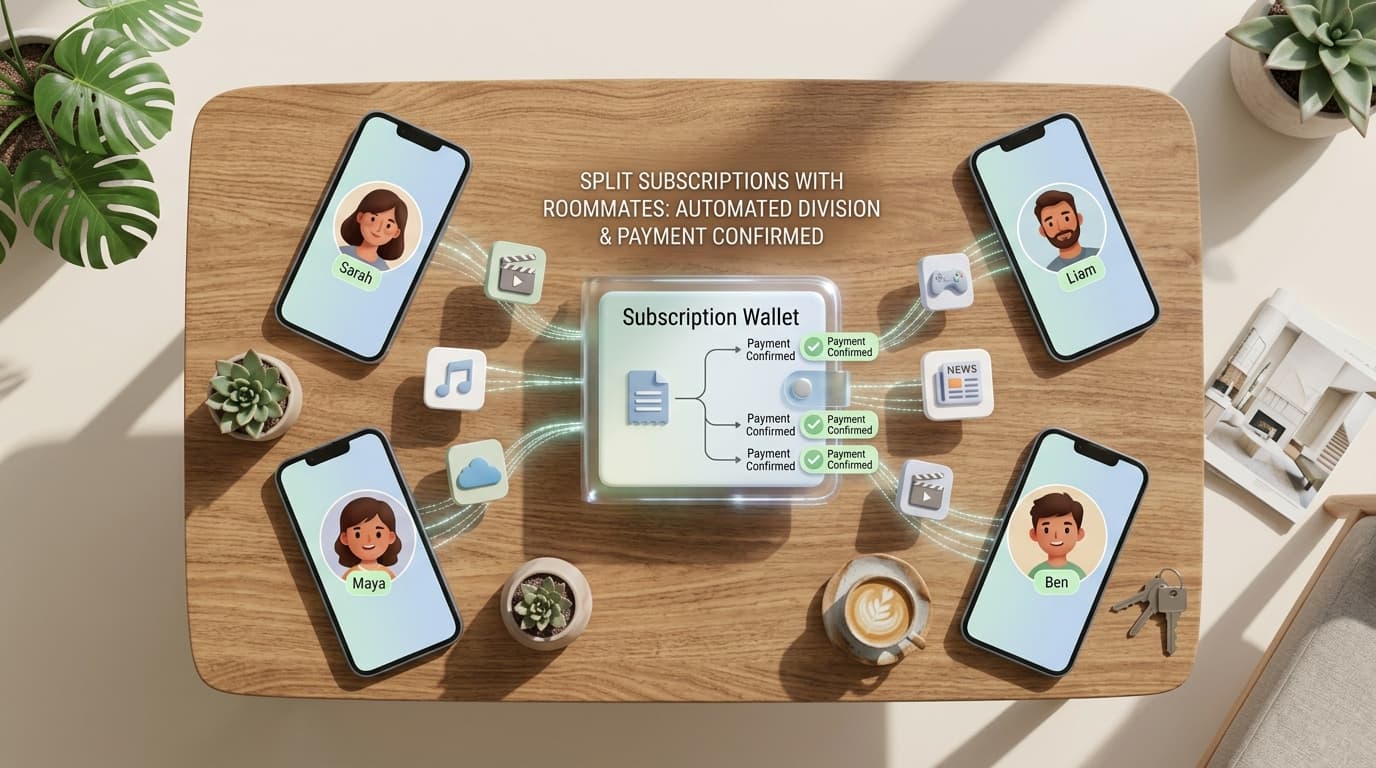
Four people share an apartment. One pays for internet, one holds the streaming login, and one forgot a cloud storage plan existed. Nobody is wrong, but the money gets messy.
Here is how to split subscriptions with roommates using real numbers, simple wording, and a few rules that stop arguments before they start.
A Worked Example With Real Numbers

Say four roommates share these plans:
- Internet: $60 a month
- Video streaming: $18 a month
- Music family plan: $17 a month, used by three people
- Cloud storage: $120 a year, used by two people
Internet and streaming go four ways. That is $15 and $4.50 each.
The music plan goes three ways, about $5.67 each. The one who skips it pays nothing.
Cloud storage goes two ways, $60 each per year, or $5 a month.
Result: three roommates pay about $30 a month, and one pays about $24.50. Nobody covers someone else’s habit, and the math fits in a text message.
Match the Method to the Plan
There is no single best way to split subscriptions with roommates. The right method depends on who uses what.
| Plan type | Best method | Why it works |
|---|---|---|
| Internet, utilities | Equal split | Everyone benefits the same |
| Streaming video | Equal split or opt-in | Depends on who watches |
| Music, games | Opt-in, equal among users | Only users pay |
| Annual plans | Monthly set-aside | Avoids a big one-time bill |
| Personal apps | Not shared | Keeps things simple |
Pick the rule once, then apply it to every new plan. Changing rules mid-year is what sparks friction.
Scripts You Can Copy
Awkward money talks get easier with ready words. Adjust the details.
Proposing a split: “I’m adding our streaming plan to a shared list. It’s $18 a month, so $4.50 each. Can everyone send it by the 3rd?”
A gentle reminder: “Quick nudge on this month’s $15 for internet. Here’s my payment link.”
Raising a price change: “The plan went up by $3, so our share is now $5.25. New amount starts next month.”
Keep the tone light and the numbers specific. Vague messages invite vague answers.
The Annual Renewal Trap
Monthly plans are easy to track. Yearly ones are where trouble hides.
A $120 storage plan renews once, often on a date nobody remembers. The account holder gets the full charge, then chases three people for $30 each.
A better habit is a monthly set-aside. Everyone sends $10 each month into one shared pot, and the annual bill is covered when it lands. If someone cancels, the leftover amount is refunded.
A reminder a week or two before the renewal also gives the group a chance to decide whether to keep the plan.
Keep Renewal Dates in One Place

A shared note works until someone stops reading it. A reminder tool is harder to ignore.
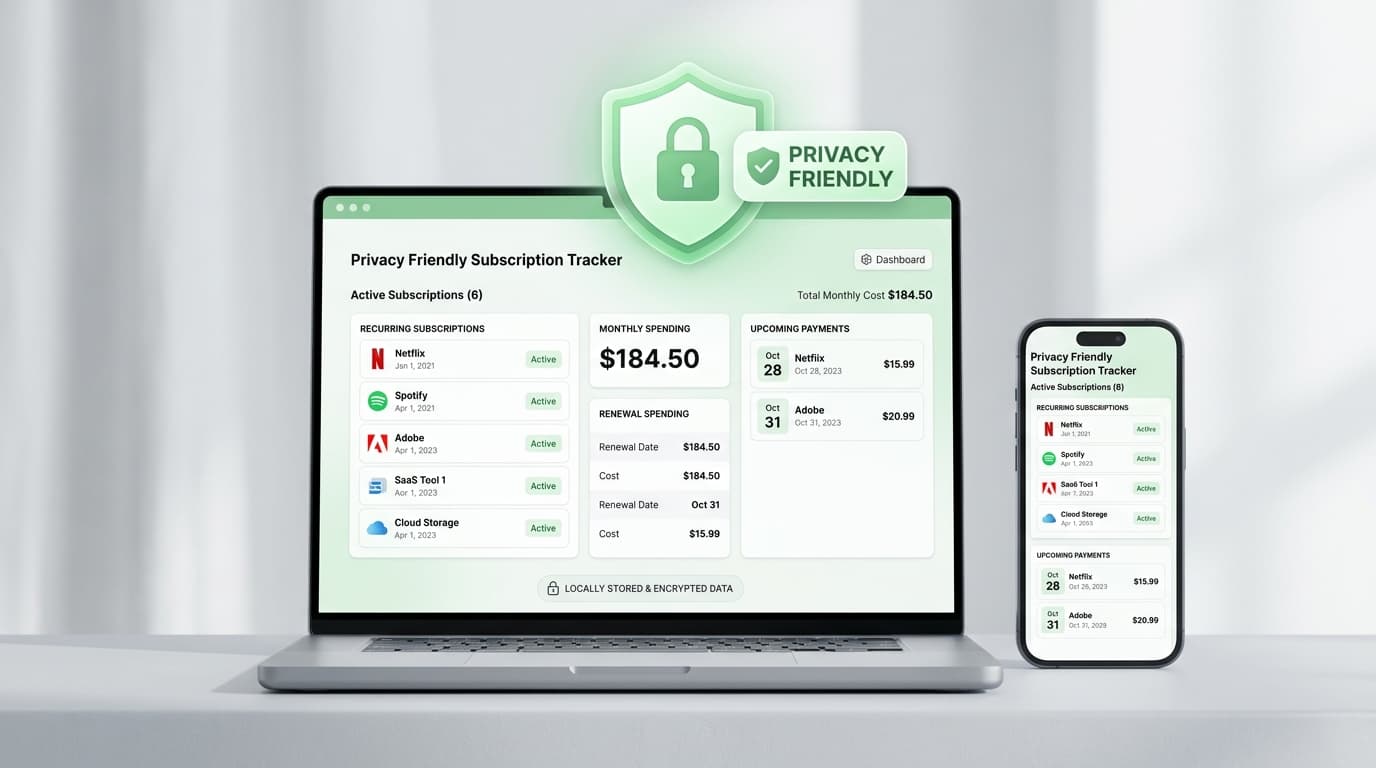
Renew Reminder lists recurring payments, shows each renewal date, and sends alerts before billing. The account holder can then warn the group in time. You can get it on Google Play for Android or from the App Store for iPhone and iPad. Check each listing for current features, sharing options, and pricing.
When the Lineup Changes
Roommate turnover breaks more shared plans than price hikes do. Plan for it now.
Someone moves in. Offer the shared essentials right away. Let them join extras if they want.
Someone moves out. Settle their balance first, then remove their access and recalculate the split. If their card holds the plan, move billing to a remaining roommate before they leave.
Someone sublets. Treat the subtenant like any newcomer. Agree on the share and the payment date in writing.
A short line in your house rules covers all three: “Shares are recalculated whenever the household changes.”
Check What the Provider Allows
Many services limit an account to one household. Roommates at the same address often count, but rules vary. Some plans cap the number of profiles or screens.
Read the current terms before inviting everyone. If a provider restricts sharing, split a plan that allows more users, or let those who want it buy their own.
Pick One Way to Pay Each Other
Chasing payments across five apps wastes time. Choose one method, such as bank transfer or a single payment app, and stick with it.
Set a fixed repayment day. The 3rd of the month works well because most people have been paid by then. Late payments should have one clear consequence, such as losing access until the balance clears.
Frequently Asked Questions
What is the fairest way to split subscriptions with roommates?
Equal splits suit essentials such as internet. For extras, let only the people who use the plan pay for it.
What if roommates earn different amounts?
Some households split by income share. Others keep equal splits for essentials and let each person choose their own extras. Agree on one approach and write it down.
How do I handle a roommate who only uses a plan sometimes?
Treat occasional use as opt-in. If they want access, they pay an equal share. If not, they stay off the plan.
Should shared costs go in the lease or a house agreement?
A lease rarely covers streaming or music. A short written house agreement is enough. Include who pays, the due date, and what happens at move-out.
How far ahead should I warn roommates about a renewal?
Seven to fourteen days for annual plans, three to five for monthly ones. That gives everyone time to decide.
What if the account holder moves out?
Transfer the plan to someone staying, or create a new account. Do this before the old payment method is removed.
Final Thoughts
A fair system to split subscriptions with roommates comes down to a written rule, one payment method, and renewal dates everyone can see.
Start with your next bill. Share the math, send one clear message, and adjust as the household changes.